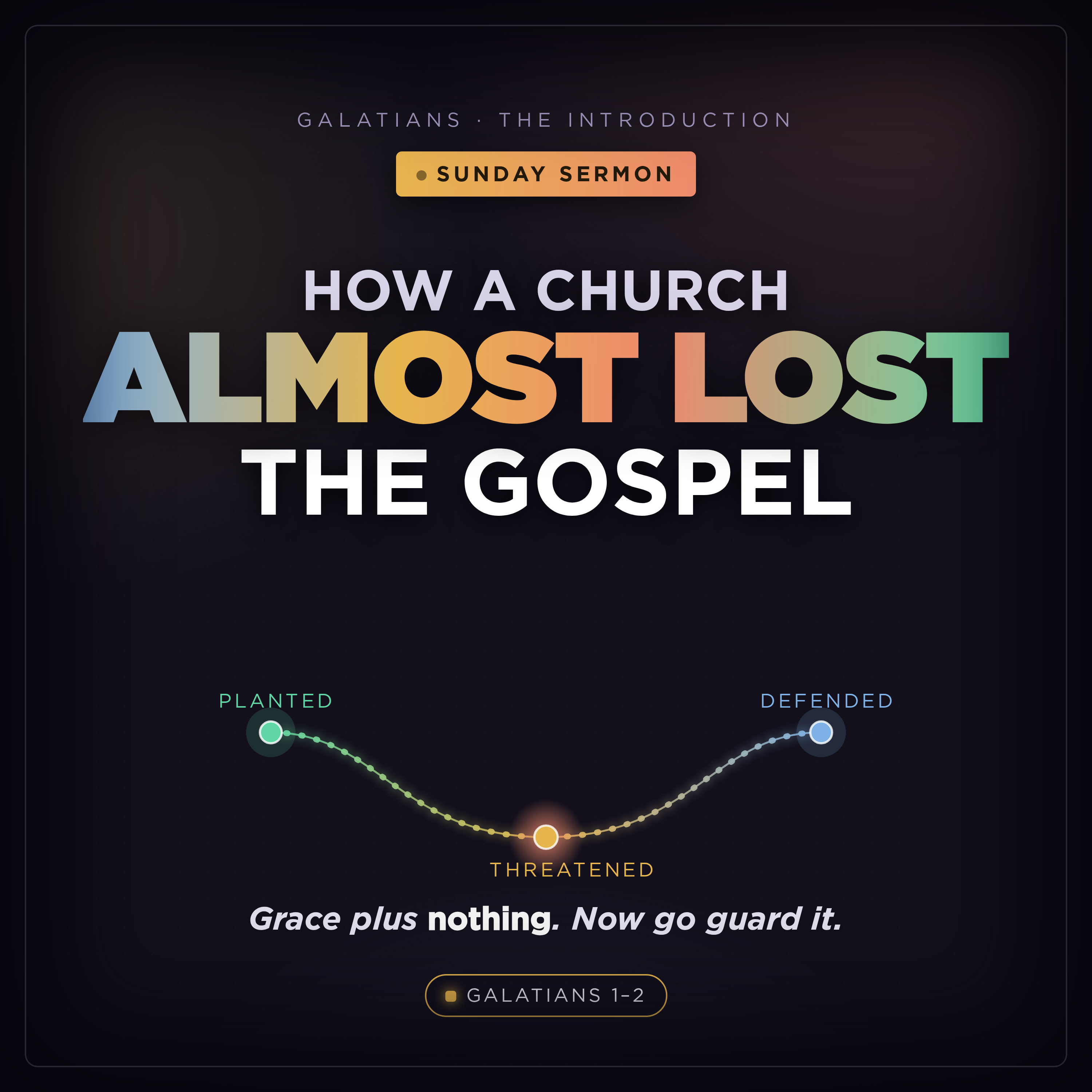
Why Legalism Creeps Into Modern Churches (And How to Spot It)
Subtle legalism and the dangerous 'Jesus plus' mentality can slowly infiltrate even the most well-meaning Christian communities, replacing the liberating message of unearned grace with unspoken rules, cultural performance standards, and a suffocating burden of religious compliance.
Key Takeaways
- Legalism rarely enters a church through overt rule-making; it almost always sneaks in through subtle additions to grace.
- The 'Jesus plus' formula subtly shifts the burden of righteousness from what Christ accomplished to human performance.
- Cultural expectations, traditions, and unwritten standards often masquerade as biblical morality.
- Protecting the pure gospel requires constant vigilance and a willingness to confront performance-based religion head-on.
The Anatomy of Creeping Legalism
When we look at the historical trajectory of early Christian communities, a troubling pattern emerges. Churches that start with a vibrant, explosive understanding of freedom and grace often find themselves sliding backward into regulation. This rarely happens overnight. It doesn't begin with a church leadership meeting announcing a wholesale abandonment of the gospel. Instead, it starts with an innocent addition.
Someone suggests that while grace is wonderful, a true believer should probably also adopt this specific cultural marker, dress a certain way, vote a certain way, or adhere to an unwritten checklist of behavioral norms. Before long, the baseline shifts. Grace is still mentioned from the pulpit, but the actual atmosphere of the church is dictated by performance. People stop asking, 'What has Christ done for me?' and start asking, 'Am I measuring up to the group's expectations?'
Understanding how this dynamic plays out helps us spot the early warning signs in our own spiritual environments. When the gospel is compromised, it is rarely traded away for blatant falsehood; it is usually traded away for a counterfeit version that looks pious on the surface.
The Danger of the 'Jesus Plus' Formula
The core mechanism of legalism is the addition formula: Jesus plus something else equals true righteousness. In the ancient church, the pressure was applied through external rituals like circumcision and Jewish ceremonial law. In modern contexts, the 'plus' looks entirely different, but the spiritual mechanics remain identical.
Today, the 'plus' might be a specific political ideology, an adherence to a particular musical style in worship, a commitment to a strict homeschooling model, or adoption of a specific psychological framework for emotional healing. Whenever we declare that Christ's finished work on the cross is insufficient without an additional human qualification, we have stepped back into legalism.
Spotting the Red Flags in Church Culture
How can a believer discern the difference between a healthy, morally serious Christian community and one that has quietly slipped into performance-based legalism? The symptoms usually manifest in the emotional and relational climate of the congregation.
First, legalistic environments are characterized by an overwhelming spirit of anxiety rather than joy. When people believe their standing with God and their community depends on their daily execution of a moral checklist, exhaustion sets in. Joy is replaced by a tense, hyper-vigilant atmosphere where everyone is watching everyone else for signs of failure.
Second, legalism breeds subtle tribalism and exclusion. Grace levels the playing field, making every believer equally dependent on mercy. Legalism creates hierarchies. It divides the community into the 'truly committed' and the 'spiritual newcomers.' Those who fit the unwritten cultural mold feel secure, while those who struggle with messy, complicated lives feel alienated and judged.
Tradition Versus Eternal Truth
Another major trap is the elevation of institutional tradition to the level of eternal doctrine. Every church has its preferences and historical ways of doing things. However, when these preferences are baptized as divine mandates, legalism takes root. Confusing our cultural preferences with God's absolute commands is one of the easiest ways to alienate sincere seekers and burden mature believers with unnecessary rules.
Guarding the Gift of Grace
Defending the pure gospel is not a passive endeavor. Historically, leaders who understood the stakes were willing to take extreme stands to keep grace untainted by human effort. They recognized that once grace is compromised by performance metrics, the gospel ceases to be good news at all. It simply becomes another demanding self-help program with a religious veneer.
For modern believers, guarding grace requires immense humility. It means examining our own hearts to see where we are secretly trusting in our own moral achievements, our theological precision, or our ministry output to justify our worth before God. It means cultivating environments where people are safe to be honest about their failures because their identity is anchored completely outside of themselves.
To explore this topic even further and hear a deep-dive discussion on how early believers fought to keep grace at the center of their communities, make sure to listen to the full episode. Brian Overturf unpacks the vital lessons from the ancient text that every modern Christian needs to hear.
Frequently Asked Questions
What is subtle legalism in a modern church setting?
Subtle legalism occurs when a church officially preaches salvation by grace alone, but practically enforces a culture where acceptance and standing before God (and the community) depend on specific lifestyle rules, political affiliations, or cultural preferences.
How does the 'Jesus plus' mentality damage spiritual growth?
The 'Jesus plus' mentality replaces the liberating power of grace with anxiety-driven performance. Instead of growing out of gratitude for what Christ has done, believers try to earn God's favor, leading to either pride when they succeed or despair when they fail.
What are common red flags of performance-based religion?
Common red flags include an overemphasis on secondary cultural standards as primary markers of holiness, a judgmental spirit toward outsiders, a lack of joy in worship, and an unspoken rule that certain sins are worse than others.
Why is grace so difficult for human institutions to maintain?
Human institutions naturally gravitate toward systems of reward and punishment because we love control. Grace is completely counter-intuitive to our transactional nature, making it a constant struggle to keep grace at the center of church life.